Heating the future: How a new partnership is helping to build a clean-energy frontier

By Stiven Cartagena, Journalist
November 24, 2026
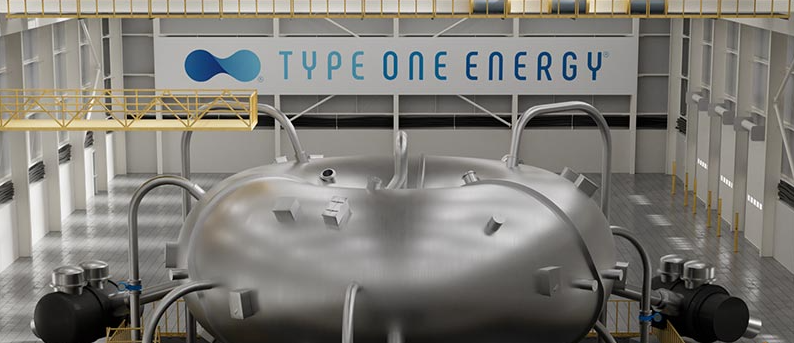
This month Kyoto Fusioneering announced it will supply gyrotron systems for Infinity One, Type One Energy‘s stellarator engineering prototype. The machine is being built at the Tennessee Valley Authority’s Bull Run site in East Tennessee.
Infinity One is a test bed, not a power plant. Its job is to prove the critical systems needed for Infinity Two, Type One Energy’s planned 400 MWe commercial fusion plant at the same site.
Deliveries from Japan are due to be completed in 2029.
For anyone who believes business can be a force for good, this is a story worth reading closely. It shows how firm, carbon-free power may move from laboratory promise to industrial reality: through patient partnerships, shared supply chains and a deliberate choice to rebuild energy communities.
The quiet workhorse of fusion
Gyrotrons rarely make headlines, but fusion cannot happen without them. They produce high-power microwaves that heat plasma to the extreme temperatures where atomic nuclei fuse and release energy.
In Infinity One, they power the electron cyclotron heating (ECH) system. That matters more for a stellarator than for other designs. Stellarators do not need the plasma to rotate to stay stable or confined, so they can reach fusion ignition using ECH as their only heating method. The gyrotron is not one component among many; it is the furnace.

Type One Energy CTO Thomas Sunn Pedersen
Under the agreement, KF will design, manufacture, test and ship 170 GHz, 1 MW-class gyrotron systems. It will run factory acceptance testing in Japan, then supervise installation and site acceptance testing in Tennessee. The systems will be built at KF’s Shiga Innovation Factory, drawing on Japan’s industrial supply chain.
Type One Energy’s CTO, Thomas Sunn Pedersen, explained the logic plainly. “Our strategy is to partner with qualified, established manufacturers wherever feasible,” he said.
Handing gyrotrons to a specialist lets his team focus on the rest of the stellarator and on the plant technologies needed for commercial use.
A new purpose for an energy site
The location may be the most hopeful part of this story. Bull Run, an established Tennessee Valley Authority power site, will now host the first steps toward a commercial fusion plant.
This is what a just energy transition can look like in practice. Old power sites already have grid connections, cooling infrastructure, industrial land and, above all, people with deep energy skills. Reusing them for clean generation keeps jobs, tax revenue and know-how in the communities that powered their countries for decades.
Fusion also answers a need that wind and solar alone cannot fully meet: firm, around-the-clock power that emits no carbon during operation. A 400 MWe plant like Infinity Two would add steady clean electricity to the grid, the kind that hospitals, data centres and heavy industry rely on.
Type One Energy works with utility, industrial and government partners to cut capital cost, place each risk with whoever can best manage it, and shorten the road to commercial operation. That pragmatism is itself a public good, because clean energy only helps the planet once it is affordable enough to build at scale.
Building the supply chain before the world needs it

Kyoto Fusion President and COO Kiyoshi Seko
The biggest risk for fusion may no longer be the physics; rather, it could be the industrial base. A fusion plant needs specialized parts made to exacting standards and delivered on time, and few factories anywhere can make them.
Kyoto Fusion’s President and COO, Kiyoshi Seko, put the point directly. As developers move from research toward machines on the path to commercial plants, he said, delivering components “with consistent quality and on schedule matters as much as performance.” KF is expanding its gyrotron production capacity so that supply is ready before fusion power plants need it.
That is the kind of long-term thinking the world has long needed.
Kyoto Fusion already operates in Japan, the United States, the United Kingdom, Germany and Canada, and supplies heating, fuel-cycle and blanket systems to fusion programmes regardless of their design. Specialists like this act as shared infrastructure for the whole field, helping many projects succeed rather than betting on one.
Fusion will not solve the climate crisis by 2029. However, at Bull Run in Tennessee, a machine heated by Japanese microwaves will test whether it can help solve it soon after. The way this project is being built, with patience, partnership and a place for the communities that powered the past, is a template worth following well beyond fusion.