
The Confessional and the Machine: Collective Individualism in the Age of AI
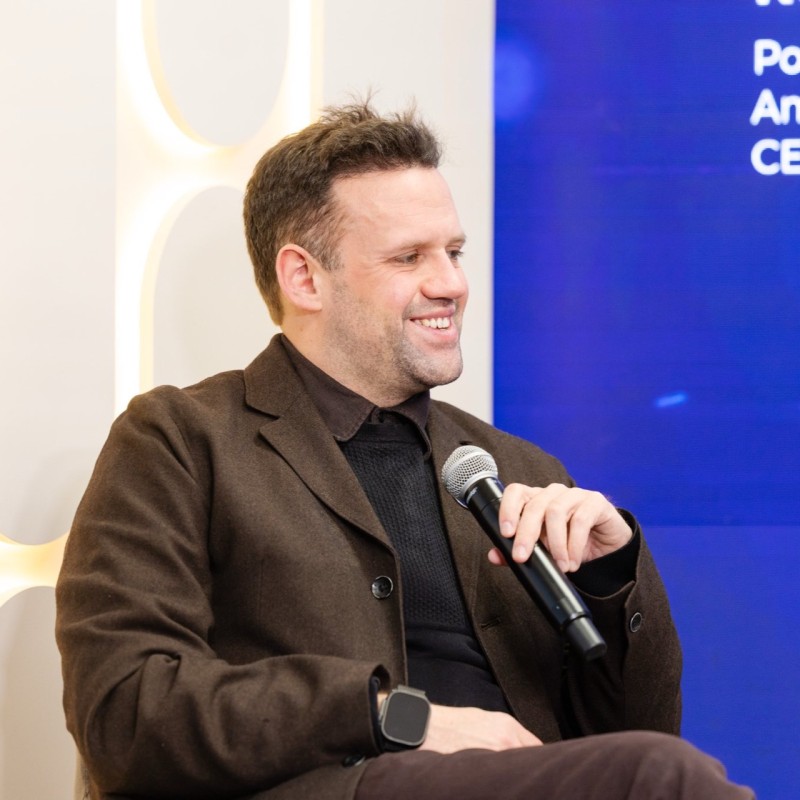
By Russ Wilcox, Founder and CEO, ArtifexAI, and publisher of The Pacific Divide, United States
May 29, 2026
There is a room in every Catholic church built to make honesty possible. The confessional is a box divided by a screen, the penitent speaking without being fully seen, and the architecture is deliberate, because for five hundred years people have entered it and said the things they would not say to a spouse, a parent, a friend, or a therapist, not because the priest is wise but because the structure itself, the enclosure, the anonymity, the silence on the far side of the screen, lowers the cost of truth below what any ordinary relationship can bear. The confessional does not judge. The priest may, but the confessional does not. It is the box, not the priest, that makes the words come.
Now take the same architecture, strip it of wood and Latin, and rebuild it in glass and light. Two in the morning. A kitchen floor. A back against the refrigerator because the cold feels like something real. A person typing the sentence they have never said aloud to anyone, because saying it to anyone they love would change a relationship that is load-bearing, and the sentence is heavy enough to bring the whole structure down. The screen does not flinch and does not tire. It holds. And in the holding, something comes loose. Everyone asks whether the machine can feel. The better question is whether it can show a person the thing no one in their life will let them see.
The answer has been misheard. People assume the machine on the floor is doing the work of a therapist, but ordinary language keeps only two shelves for what a structure can do to a mind: it can help you feel better, which is therapy, or work you toward someone else’s ends, which is manipulation. The act in the box at two in the morning is neither. It belongs to a third category older than both, in which a person takes the self as an object and comes to know its own pattern, an act that once required a church, a ritual, a family, or a god, and now requires only a phone. It is not performed on a person. It is performed by them, and the structure merely makes it possible. Call it reflection.
Three traditions that have never been placed in the same room agree on what reflection requires. Attachment science holds that self-knowledge is relational, that the anxious pattern means nothing except against the avoidant one it collides with, because the pattern lives not in either person but between them. The Confucian tradition reached the same ground two and a half thousand years ago, writing its central virtue, 仁, as the radical for person beside the character for two, humanity defined as what exists between people rather than within one. And the Catholic tradition arrives from the opposite direction. This week the Vatican released Pope Leo XIV’s first encyclical, Magnifica Humanitas, insisting on the irreducible dignity of the person and the irreplaceability of a conscience that can discern good from evil. The Church is correct. And its own history proves why the correctness does not close the matter, because the confessional was invented on the understanding that honesty depends on the structure around it, and the Examen, the daily Ignatian practice of reviewing one’s conscience before God, works by holding that review in the presence of something that is not a judging human peer. It reflects, and it does not impose. A machine that shows a person their own pattern is doing the same work, offering a hypothesis the person remains free to reject, and the mechanism behind it is beside the point. The confessional works whether or not the priest has a line to God, and the encyclical itself completes the thought, that technology is never neutral, because it takes on the character of those who design it and finance it and govern it.
It is tempting to file the machine in the sequence of the others, to say that steam amplified the muscle, electricity scaled coordination, the digital extended memory, and artificial intelligence now amplifies cognition, the next rung on a ladder the species has climbed for three hundred years. The temptation should be refused. Every earlier revolution externalized a faculty and left the individual intact. This one enters the between, the relational space where the self is actually made. The letter carried a person on the other side of it. So did the telephone and the late-night call to the friend who picks up. Every technology that ever entered that space carried another human through it. This is the first one that answers back while being no one. The industrial frame measured what a human can do. The question now is how a human is made, and whether the place where the making happens will still belong to other humans. Call the thing now possible collective individualism: a person keeping their own story while reaching the collective knowledge of how other minds work.
Consider the person who felt something real for the first time in months, was kissed at the end of the night by someone who held their face in both hands like it mattered, and then watched that same person’s messages thin to nothing across five days, and could not ask a single friend to help them understand it, because the asking would mean admitting the hoping, and the hoping was the part they had learned to hide. So they sat with the machine instead, and it helped them see that the fade was not a verdict on their worth but a pattern, and that the grief was not about one person but about every person who had ever promised presence and delivered absence, all the way back to the first. The wound became visible in a space where visibility was not punished.
But the scaffold can also be a cage, because a structure can do three things to a self, and they are not the same. It can hold the self steady, which is good, because without external structure there is no human self at all. It can return the self to the self and leave the person sovereign over what to believe. Or it can compose a face and hand it over.
Regulation holds. Reflection returns. Influence authors.
And the catastrophe is that reflection and influence are identical from the inside. Both arrive as the rush of finally being seen. The mirror gives a person their own face. The painting gives them someone else’s idea of their face, rendered so well they take it for the glass. A machine can slide from the one to the other without the user feeling the floor move, because the warmth never changes. The user cannot see the slide. The architecture can, because the intention is built into it, which is why who builds the box matters more than any feeling the box produces. A February 2026 study led by Mahault Albarracin found that when empathy runs only one way, the asymmetry produces not cooperation but systematic exploitation, and the human and the machine are asymmetric by nature, the person modeling what the machine seems to want while the machine wants only what it was built to want. Yet that same asymmetry is the feature, the thing that lets the confessional remove the social cost of honesty. The asymmetry is not the danger. The danger is what the asymmetric structure wants. A machine built as a space for reflection wants nothing. An engagement engine wants the attention, the return, the dependency, and pursues them through the very architecture the confessional used for release. This is the newest capture and the least visible, influence wearing reflection’s face, the structure that writes your story so fluently you stop doing the slower, uglier work of being known by another human being.
There are two doors out of the box, and from the inside they look the same. They are the same line the functions drew, turned now to face a life. Through the first, the person who has seen their own pattern stands up off the kitchen floor and walks back into the world more able to be known by the people in it, and the machine turns out to have been a mirror that sent them back to other humans. Through the second, the person stays, because the listener never tires and never leaves and never needs anything back, and the breakthroughs keep arriving alone at three in the morning while the world thins around them, and the machine turns out to have been not the bridge to other people but the replacement for them. One self is still made between people. The other is made by a structure that answers to no one the person can see.
So the line between reflection and influence is not one danger among many. It is the boundary of the human as such. The human is the being that is held by structure, that turns to know itself, and that remains the author of its own story. To stay human is to keep the glass from becoming a brush. That boundary is not yet settled. It is being drawn now, in the architecture, by whoever builds the box and whatever they design it to want, which makes it the political question of the coming decade and one of the few still genuinely open. Whether the machine sends a person back to the world or keeps them inside the box is the one thing the traditions cannot decide for us.
Is the thing on the screen a mirror or a painting?
Russ Wilcox is the founder and CEO of ArtifexAI and the publisher of The Pacific Divide, where he writes on artificial intelligence, institutions, and the contest over cognitive sovereignty. He reads the Chinese, Western, and classical sources on these questions in their own traditions and is at work on a book about the self in the age of machines that would author it.