The Oldest Deal
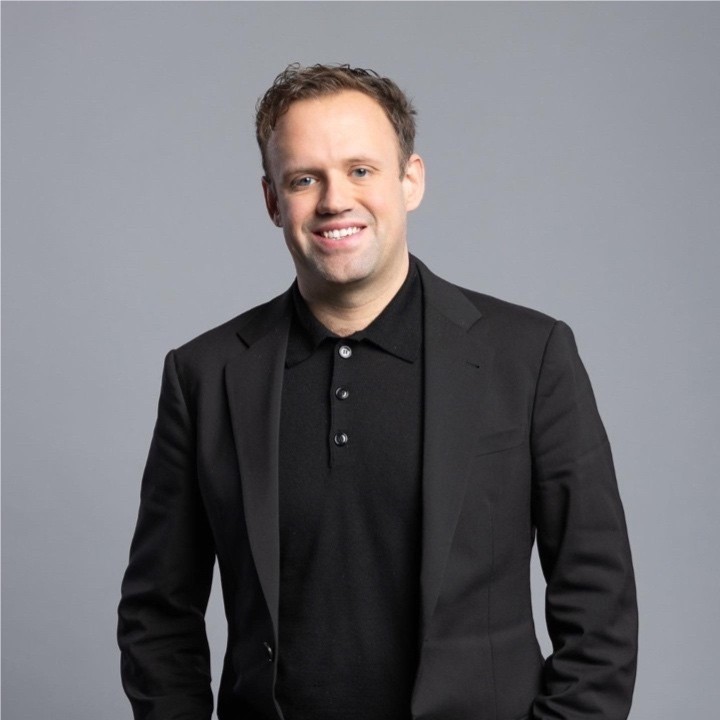
By Russ Wilcox, Founder and CEO, ArtifexAI, Publisher, The Pacific Divide, United States
July 6, 2026
How artificial intelligence is unwinding the twelve-thousand-year-old bargain that built our institutions.
Sometime this week, you asked a machine a question you would have asked a person. Maybe it was the symptom you typed into your phone at midnight instead of calling the clinic in the morning. Maybe it was the lease clause you had explained for free instead of paying a lawyer to read it. Maybe you learned how to do something no school ever offered to teach you, in an afternoon, in your kitchen.
You did not experience this as a decision. It felt like convenience. A small shortcut in a busy week.
It was something much older than convenience. To see what, you have to go back to the beginning of the deal.
Around twelve thousand years ago, in the hills above the Jordan Valley, a family did something no family had ever done. They handed their grain to a building.
Before that moment, every human function lived in human hands. You grew your food, you carried it, you guarded it. Your memory was the library. Your mother was the hospital. The old man at the fire was the school. Everything a person needed, a person held.
The granary changed the terms. Hand over your grain, and the building will keep it safe through the winter, safe from rot, safe from raiders, safe from your own bad luck. In exchange, the building gets your dependence. You will come back. You will accept its rules. You will need it more next year than you did this year.
That was the trade, and nearly everything you can see from your window descends from it. The granary became the temple that guarded the grain, the temple became the treasury, the treasury became the bank. The healer’s hut grew walls and became the hospital. The fire circle got a roof and became the school, then the university, then the credential. The elder’s judgment became the court. Step by step, over a hundred centuries, we moved the functions of life out of hands and into buildings, and the buildings organized themselves into what we now call civilization.
A good trade. Probably the best our species ever made. Surplus, cities, law, medicine, the accumulated knowledge of strangers: all of it is downstream of the day a family decided the building could hold the grain better than they could.
But it was still a trade. We tend to forget that. Institutions feel like the weather, permanent and given. They are contracts, and contracts hold only as long as both sides need the terms.
Most analysis of artificial intelligence never reaches this contract, because it starts from the wrong revolution.
When people reach for history to explain AI, they settle on the industrial revolution. It was the last time machines rearranged human life, so the comparison feels natural, and every conversation about AI becomes a conversation about efficiency: productivity gains, which jobs disappear, which survive, how fast workers can retrain. Listen to any panel, any earnings call, any parliamentary hearing. It is the industrial revolution debate wearing new vocabulary.
The comparison fails, and the failure is one of category, not degree.
The industrial revolution happened inside the deal. The steam engine replaced muscle, the assembly line replaced craft, and all of it made the buildings bigger. More banks, larger hospitals, schooling for everyone, the corporation, the modern administrative state. Each advance pulled the terms between people and institutions deeper into ordinary life, until by 1950 an average person depended on more buildings, for more functions, than any human in history. The industrial revolution was the deal at maximum scale. An efficiency event, the largest one ever, running entirely on the original terms.
The agricultural revolution belongs to a different category. It did not make an existing arrangement more efficient. It created the arrangement. Before it, there were no institutions to make efficient. After it, everything is institutions. There has been exactly one deal-level event in the human record, and it happened in those hills twelve thousand years ago.
This is why the efficiency frame keeps producing analysis that is accurate in its measurements and mistaken in its object. Measuring AI with industrial-era instruments is measuring an earthquake with a thermometer. The instrument returns a number, the number is real, and it misses the event. Efficiency events show up in productivity data. A deal-level event does not, because no dashboard was ever built to watch one.
Which brings this back to your midnight question. You were not being efficient. You were renegotiating.
Here is what I have watched over the last three years, in city records offices and hospital systems and government ministries on four continents: one side of the contract has quietly started walking back its terms. The public argument about artificial intelligence is an argument about jobs. That is the industrial revolution talking. Let it talk, the debate is real, but underneath it functions are leaving buildings.
I saw it plainly last year in a town records office on the New England coast. The clerk told me the counter had changed. Residents used to arrive with questions. Now they arrive with answers, having asked a machine at home, and they come to the building only to confirm what they already know. Her office had spent a century as the place where a certain kind of knowledge lived. Within two years it had become the place where that knowledge is stamped.
The midnight symptom search is the granary running in reverse. A function that lived inside a building for two hundred years, guarded by credentials and waiting rooms and billing departments, walked out the door and into a hand. The lease clause you had explained was a piece of the legal system leaving the legal building. The skill you taught yourself was the school losing its monopoly on the fire circle.
No one is leading this. There is no movement and no manifesto. There are only hundreds of millions of ordinary people making the same small choice you made at midnight, each for their own reasons, none of them thinking about the Jordan Valley. So it was with the original deal. Nobody voted to build civilization. Families handed over grain, one by one, because the terms were good.
Now the terms are changing again, one query at a time, and the oldest deal in human history is coming undone from below. The second deal-level event in the human record is underway, and it runs in reverse.
The other party to the contract has barely noticed, and that other party may well be you. If you are reading this, you likely run one of the buildings: a ministry, a bank, a university, a hospital system, a firm built on credentialed judgment. So I will describe what the next decade feels like from inside the granary.
Institutions are built to survive attack. They have lawyers for lawsuits, guards for mobs, lobbyists for hostile legislation. They have no defense against absence.
That is how this arrives. Nobody storms the hospital. The waiting room just gets quieter, and the quiet is invisible in any single quarter and unmistakable across a decade. The bank shrinks to a place people visit twice a year, then never, while the function it once monopolized runs on something in their pockets. The university keeps its buildings and its ceremonies while the eighteen-year-olds reprice the credential.
Leaders will read the decline as a marketing problem, then a funding problem, then a crisis of public trust. Each diagnosis will feel plausible. Each will treat a symptom, because what they are watching is the deal expiring, and most institutions never knew they were party to one.
You do not have to take my word for it. Set a marker twenty-four months out. First to feel the unwinding will be the institutions whose core product is answers: advice lines, front desks, intake consultations, introductory courses, routine professional opinions. Their first-contact volume will fall while their satisfaction scores hold steady, and their leadership will call it a channel shift. Check back in two years. Count how many are still calling it a channel shift.
If you expect this article to end as an elegy for the buildings, I should tell you where I stand.
I did not grow up in the rooms where these things get discussed. I grew up in the years when my family needed the buildings and the buildings were not built for us. Government assistance lines. Institutions that got things wrong and made you prove it. I know precisely what it costs to stand outside a building that holds a function you need.
So when I say the deal is unwinding, understand that I am not mourning. For twelve thousand years, access to the buildings decided who got the functions. The family with the lawyer, the family without. The town with the hospital, the town six hours out. Billions of people have lived their entire lives on the wrong side of a granary door.
And the unwinding means the functions reach them anyway. They reach them first, because people who never had the option of waiting do not wait. The most important consequence of this reversal will not be what happens to the buildings we can see. It will be what gets built by the people the buildings never served.
That claim needs evidence, and the evidence exists, sitting in places most analysts never look. Over the coming articles I will trace the unwinding through the systems that hold modern life together: how it moves, where it started, which societies are fighting it and which are building for it, and what a civilization looks like when function and institution separate after a hundred centuries of fusion.
Because the unwinding has two endings, and nothing in the technology chooses between them. In one, the functions land in hands: billions of people holding what the buildings once held, the deal’s promise finally reaching the people it never served. In the other, the functions leave the old buildings only to gather in a handful of new ones, granaries larger than anything the first deal raised, held by fewer landlords than any civilization has ever answered to. That second ending has a name: digital feudalism.
The unwinding will not pause while we argue about jobs, and neither will the choice between its endings. It is being negotiated right now, at midnight, in kitchens, by people who think they are just saving time. I have spent three years watching the terms change. The work of this series is to make sure that when the new terms are written, no one is left on the wrong side of a door again.
Russ Wilcox is the founder and CEO of ArtifexAI and the publisher of The Pacific Divide, where he writes on artificial intelligence, institutions, and the contest over cognitive sovereignty. He has been published in the Jamestown Foundation’s China Brief and The Diplomat. He reads the Chinese, Western, and classical sources on these questions in their own traditions and is at work on a book about the self in the age of machines that would author it.