Sustainable Agriculture: Latin America’s Green Revolution

By Frank-Jürgen Richter
September 14, 2025
Latin America is home to global agricultural powerhouses. The region’s economies such as Brazil, Argentina, and Mexico rely heavily on agriculture as a key driver of their economic growth.
Brazil, the region’s largest economy is one of the largest producers and exporters of maize, soybeans, and wheat, globally. Production and exports of these key agricultural commodities continue to increase in Brazil. In 2023, Brazil exported an estimated 93 mmt (million metric tons) of soybeans, 47 mmt of maize, 20 mmt of soybean meal, and 3 mmt of wheat. Key markets of its produce continue to be China, followed by Southeast Asia, the Middle East, and Europe.
In the 2024-25 harvest season, Brazil is expected to harvest 322.3 million tons of grain—an 8.2% increase from its previous year’s harvest. This bumper produce is due to the favorable weather conditions and increase in farming area in the country.
Similarly, agriculture is also a key sector for Argentina’s economy, accounting for 15.7% of its GDP and 10.6% of its revenues in 2021. Between June 2024 and June 2025, some of the country’s top exports included soybean meal (US$1.1 billion), corn (US$771 million), and soybean oil (US$765 million). Argentina’s y-o-y growth in exports was primarily driven by increased demands from the US and Chile.
Meanwhile, Mexico continues its position as the world’s largest exporter of fruits and vegetables. In 2024, Mexico exported US$10.69 billion of vegetables and US$9.56 billion of fruits, accounting for 7.8% of the global market share.
Together, these numbers clearly indicate the importance Latin America has towards sustaining the world’s growing food demands.
Latin America’s Agricultural Dominance
The region’s agricultural prowess, has a lot to do with its climate. In the case of Brazil, the country has developed a unique concept of tropical agriculture, allowing Brazilian farmers to produce food in harmony with local conditions. Although much of Brazil’s land was unfit for farming, the country was able to become one of the world’s top agricultural producers and exporter, through some key farming innovations it adopted early on.
Brazil invested on turning its vast barren land—the Cerrado—into fertile agricultural land. It was able to do so through a methodical approach, spanning decades of consistently applying lime and bacterium to fix the soil. Brazil has now gained enough knowledge in turning barren land into fertile soil, that now accounts for nearly 50% of Brazil’s grain production. Brazil also invested in crossbreeding grasses from the African savannah, helping it to produce up to 25 tons of grass feed per hectare. The Brazilian government pushed for the adoption of no-till agriculture practice, a farming technique that keeps the soil more fertile and resilient. Also, the application of integrated farming in Brazilian farming techniques, brings numerous benefits, such as effectively doubling the efficiency of the land. Land coverage using integrated farming is expected to increase to 43% by 2030 in the country.
Moreover, Brazil has also pushed for removing global hunger and poverty. In November 2024, under the leadership of Brazilian president Luiz Inácio Lula da Silva, the country officially launched the Global Alliance Against Hunger and Poverty at the G20 Leaders’ Summit in Rio de Janeiro, Brazil. The Alliance’s membership consists of 88 countries, 42 foundations, 25 international organizations, and 9 international financial institutions. And it replaces existing initiatives for hunger and poverty with new endeavors that connect the countries with the means to contribute to the countries that need help in closing their hunger and poverty gaps.
The Alliance’s unique nature, which emphasizes collaboration, knowledge sharing, and multilateralism, coincides with what Horasis believes in. We believe that our present challenges warrant a more collaborative and innovative approach, that which is also inclusive and sustainable. In this spirit, we are organizing the 10th edition of the Horasis Global Meeting, scheduled to take place in São Paulo, Brazil, between 7 to 10 October 2025. The meeting will host several panels and plenary sessions with experts from various fields, bringing their point-of-views and knowledge to seek a more holistic, inclusive, and sustainable framework to our present challenges.
Role of Technology
Technology is playing a critical role in making farming sustainable and resilient, particularly in Argentina. By 2025, adoption rates of precision agriculture is expected to exceed 60% in the country, involving the use of satellite-based monitoring, soil sensors, drones for surveillance, and AI-powered systems to optimize every input from water and fertilizers to pesticides. Argentina is also investing in research to develop genetically modified soybeans and new varieties of corn, wheat, and sunflower, engineered for resilience against local climate threats and pests. Argentinian farmers are also implementing blockchain solutions to improve traceability and foster transparency, which has now become an important criterion in trading with other countries.
Mexico has been investing in climate-smart agriculture (CSA) that integrates climate responsiveness to agriculture development. Mexican farmers are adopting a myriad of CSA techniques, ranging from agroforestry to organic production and drip irrigation. These CSA techniques have resulted in myriads of benefits for Mexican farmers—increasing soil health, its water retention capacity, increasing significant carbon sequestration in the farming system, and helping reduce input costs through lesser use of pesticides and fertilizers.
In Chile’s Biobío region, IoT-driven irrigation systems have made a real difference to the agricultural sector. It has achieved up to a 30% reduction in water consumption by farms, increased crop yields by as much as 20% due to the more efficient use of water, resulting in reduced costs and economic benefits for farmers.
Going forward, key economies of Latin America, i.e., Brazil, Argentina, and Mexico hold the key to strengthen the region’s food security and be a leading example in sharing its farming knowledge and agriculture prowess with other emerging countries, aiming for agricultural growth and food sustainability. The region should come together as a bloc to enable policies that support the adoption and development of CSA techniques, with help from the community and business leaders.
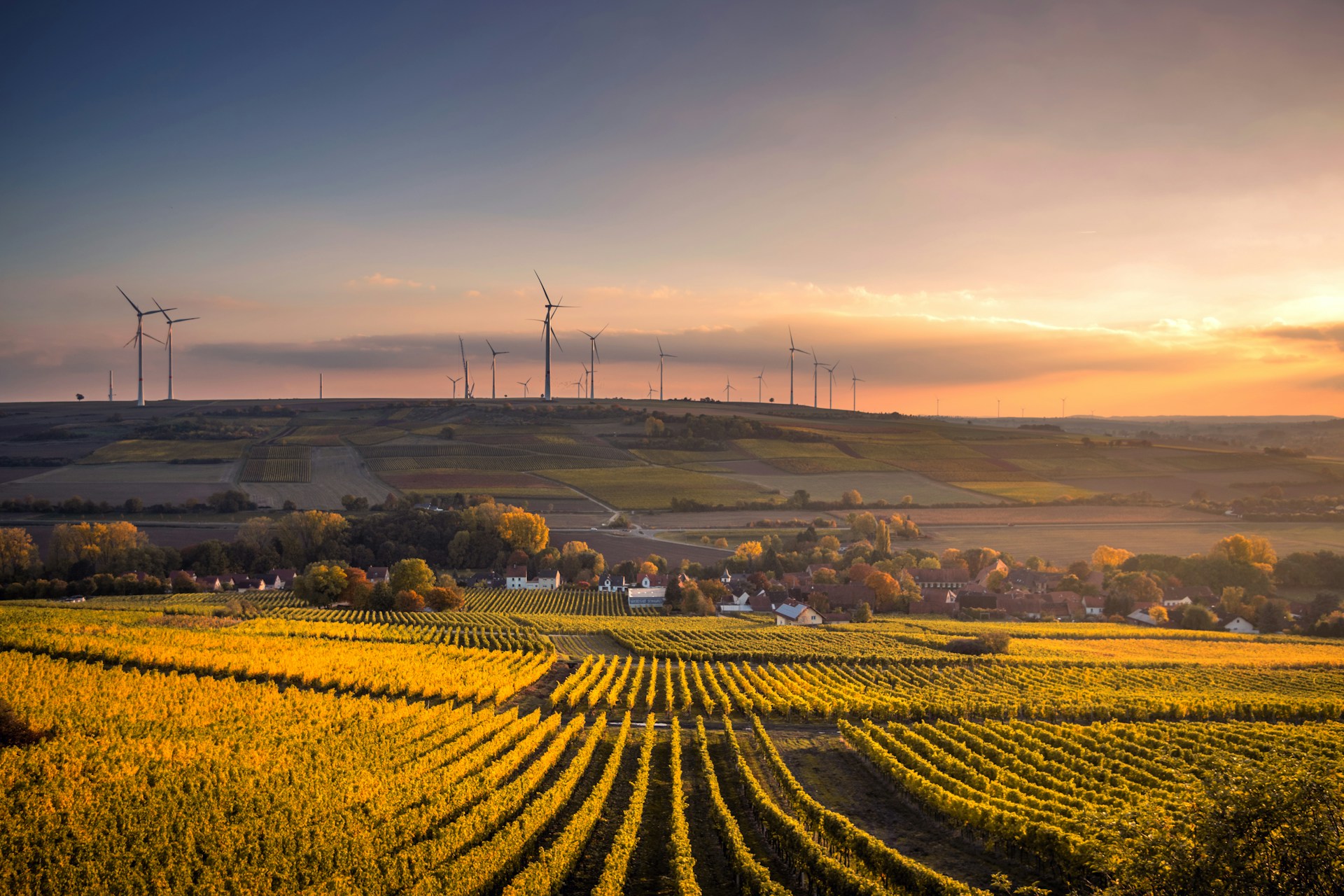
Photo Caption: Using a methodical approach, Brazil has been turning barren land into fertile soil.