India earmarks $1.1 billion for its state-backed VC fund, Ness appoints new CEO as nation enters its AI era

By Stiven Cartagena, Journalist
February 20, 2026
AI is no longer a futuristic concept— today it’s already become central to how nations govern and serve citizens. Nowhere is this more true than in India, where government strategy and public and private-sector adoption are driving a nationwide AI transformation.
This was highlighted this month, with India hosting a four-day AI Impact Summit that was attended by execs from major AI labs and Big Tech, including OpenAI, Anthropic, Nvidia, Microsoft and Google.
With more than 250,000 people in attendance, the heads of these companies –including Alphabet CEO Sundar Pichai, OpenAI CEO Sam Altman, Anthropic CEO Dario Amodei, and Reliance Chairman Mukesh Ambani– spoke alongside India’s Prime Minister Narendra Modi and other government leaders.
The AI summit wasn’t just symbolic; it reflected a decisive shift from experimentation to execution—where governments and the enterprise are actively leveraging AI to solve real-world problems.
A look into India’s national AI strategy
India’s national AI strategy, focused around its IndiaAI Mission, looks to democratize technology, address local challenges, and position the country as a global AI leader.
It does this by building robust computing infrastructure, strengthening regulatory frameworks, and fostering innovation that spans urban and rural communities alike.
For the strategy in action, perhaps the most compelling proof of it works — and in the country having its AI moment– is how rapidly the technology is moving into everyday governance and public services.
From multilingual platforms that use AI to serve citizens across 22 languages to initiatives that strengthen responsible health AI ecosystems, India is prioritizing AI applications that directly benefit its 1.4 billion citizens.

The national AI strategy is not limited to policy frameworks, and is also supporting administrative functions.
For instance, a recent UNESCO-aligned initiative launched an AI competency framework to elevate the skills of more than 3 million civil servants, ensuring that public administrators can confidently deploy and govern AI systems at scale.
At the same time, partnerships between the Indian government and global tech leaders are helping build future-ready AI talent and systems. Major programs now aim to integrate AI learning into educational curriculums and workforce development, preparing millions of professionals for an economy where AI is core part of how people work.
Sudip Singh appointed CEO of Ness Digital Engineering
Enterprises as well are taking note of India and its AI era.
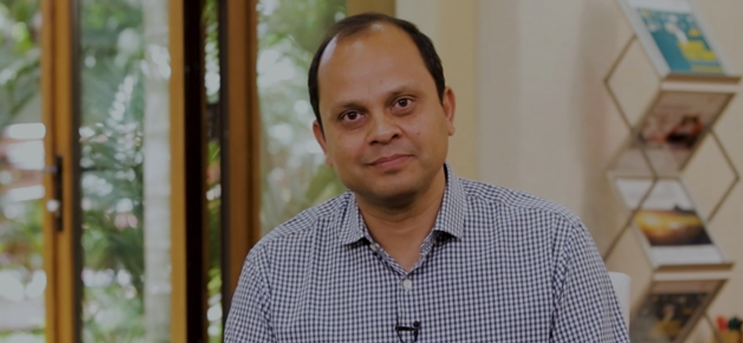
This week Ness Digital Engineering appointed Sudip Singh as its next CEO—a leadership move that underscores the company’s intention to be a key partner in India’s AI-enabled growth story.
Singh brings extensive experience in technology leadership and transformation. Under his leadership, the company is poised to help governments and enterprises alike navigate their AI journeys—from modernization of legacy systems to deployment of scalable and secure AI solutions.
Singh was most recently CEO of ITC Infotech.
India’s moment in AI is, fundamentally, about translating technological promise into outcomes that improve lives. As public and private organizations embrace AI –for everything from predictive analytics in public safety to multilingual citizen services– partners like Ness will play an important role.
In this new era of intelligent governance, the intersection of public ambition and private engineering capability will define who leads in the next decade—and India has clearly set its course to be at the forefront.
Article’s featured photo of Sudip Singh