Navigating the Energy Transition: Policies and Innovations

By Frank-Jürgen Richter
September 10, 2025
The pandemic dealt a blow to the global economy. Amid the global health scare, trade was disrupted, disrupting businesses and livelihoods. This once-in-a-century event left an indelible mark on human history, warranting a closer look at our approach to the future.
The breakneck speed at which humanity has progressed in areas of trade, science, technology, healthcare, and education is commendable. But this progress needs to be rethought. The world now needs a recovery plan that is not fraught with risks that get widely exposed in times of crisis.
As economies gear back to a full recovery mode, so will the need for increased energy. An uninterrupted flow of sustained energy will be critical to sustain the growing energy demands of data centers, AI, smart cities, transport, and the fourth industrial revolution.
As per the World Energy Council, “this is a time of unprecedented uncertainty for the energy sector. Energy demand will continue to increase. The pressure and challenge to develop and transform the energy system is immense.” By 2050, total primary energy supply (equal to consumption) is estimated to increase from 546 exajoules (EJ) in 2010 to 879 EJ by 2050, in a scenario where priority is given to achieving individual access and affordability of energy through economic growth. The energy consumption expected to be witnessed in the next half a century is significantly higher than what was observed between 1990 to 2010.
Reliance on fossil fuels for meeting this growing energy demand is both futile and dangerous. What is needed is a transition to an energy framework that is aligned to complement our net-zero goals. This is a monumental task requiring a more collective action.
At Horasis, we believe that our present challenges warrant a more collaborative and innovative thinking, that which is also inclusive and sustainable. In this spirit, we are organizing the 10th edition of the Horasis Global Meeting, scheduled to take place in São Paulo, Brazil, between 7 to 10 October 2025. The meeting will host several panels and plenary sessions with experts from various fields, bringing their point-of-views and knowledge to seek a more holistic, inclusive, and sustainable framework to our present challenges.
Futile and Dangerous
Presently, fossil fuels remain our core source of energy supply, be it for electricity, heating, cooling or transportation. This cannot be the approach for long. Emissions released from burning of fossil fuels release harmful greenhouse gases (GHGs) that harms the ozone layer—the protective layer that keeps the Earth’s temperature under control.
Damaging of the ozone is leading to record temperatures being witnessed, globally. Since the past few years, we are seeing a similar pattern unfold when it comes to weather extremes. Several locations in the world are witnessing record-breaking temperatures, leading to warmest years and wildfires on record. Where one part of the world is going through drought-like situations, others face excessive rainfalls, leading to excessive floodings and damages to public infrastructures and livelihoods.
In environmental terms, depending on fossil fuels for our energy needs is a risky bet. Coal, oil and gas, are all finite resources, making them unsustainable for the future. These finite resources are formed from the remains of plants and animals over millions of years. It is futile to depend on a source for running our economy that could deplete unexpectedly, anytime.
Solutions to Energy Sustainability
There are several ways we can make our energy system sustainable—government policies, technological breakthroughs, and substantial investments in renewable energy solutions.
Sweden’s government has set an ambitious goal of becoming fossil-free by 2045 and depending entirely on renewables for its energy needs. Sweden is party to some 80 initiatives and declarations to strengthen global climate efforts.
In December 2023, the Swedish government pledged to triple nuclear energy to phase out fossil fuels and meet its energy needs by 2050. “For the first time, nuclear energy has also been given a prominent role here at COP28. The Swedish Government welcomes this, of course. We want to be an active cooperation partner on the global stage to pave the way for new nuclear energy, which is required to phase out fossil fuels,” said Ulf Kristersson, prime minister of Sweden.
“This Declaration marks the beginning of a completely new view of the role of nuclear energy in the green transition. Not only does working to triple global nuclear energy capacity improve opportunities to meet the climate objectives, it’s also crucial for creating growth and prosperity in parallel,” followed Ebba Busch, deputy prime minister of Sweden.
Brazil is fueling its energy transition by expanding its renewable energy capacity. As of January 7, 2025, the South American giant had 208,930.5 MW of total installed power generation capacity, 84.95% of which was from renewable energy. Brazil is becoming a hotspot for innovation and investment in renewable power generation. By 2040, Brazil is expected to attract US$300 billion in infrastructure investments in the energy sector, of which 90% will be dedicated to renewable infrastructures such as small and large hydroelectric plants, wind, solar, and biomass capture.
Moreover, emerging technologies such as smart grids equipped with sensors, machine learning, and artificial intelligence can help energy network operators optimize grid performance, while managing changes to energy supply and demand.
Going forward, global leaders will need to push for robust policies and governance frameworks, that enable energy transition initiatives that not only meets our energy needs, but is also equipped to achieve our climate goals and reduce our carbon footprint.
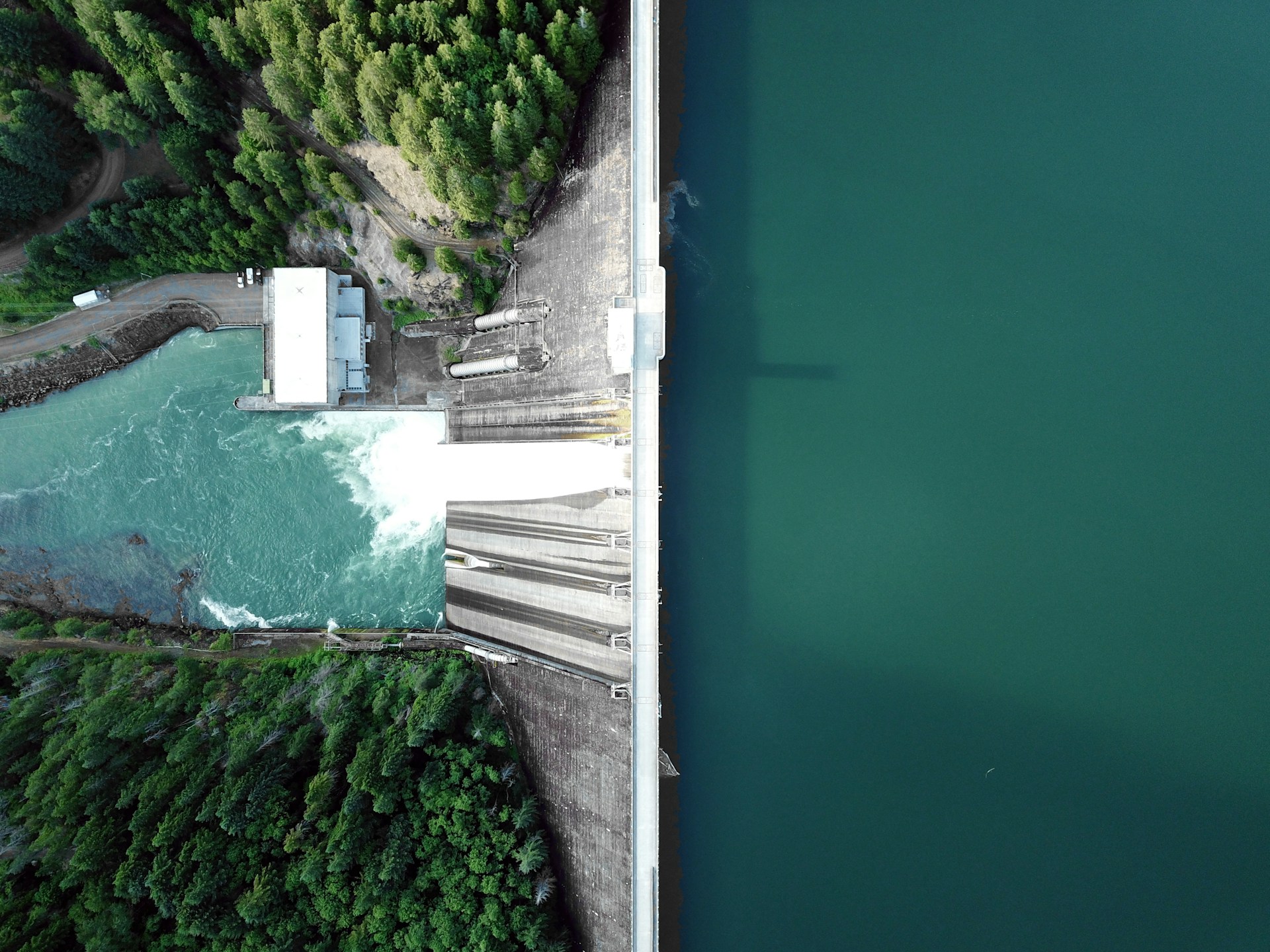
Photo Caption: Reliance on fossil fuels for meeting the growing energy demand is both futile and dangerous.