Smart and Green Cities: Shaping the Future of Urban Living

By Frank-Jürgen Richter
August 11, 2025
Cities of today are being built to not just be livable, but also sustainable and resilient to its citizens’ and climate’s evolving needs. Be its infrastructure, governance, or urban planning, city planners have to be several steps ahead to ensure that cities of the future are capable to meet the evolving demands of its populace.
This is where emerging technologies such as AI, IoT, and big data have been of tremendous help. With these emerging technologies, cities are being transformed into smarter cities, capable of improving its residents’ daily lives.
And regarding climate change, cities are also becoming smart by incorporating and encouraging green innovations to tackle the rising need to reduce urban heat issues and become net-zero. Green innovations such as urban farming, urban rainwater harvesting, urban forestry, waste management, and rooftop solar are reinventing the wheels of how smart cities are also becoming eco-friendly.
“Hundreds of cities around the world are leading the way by expanding inclusive green spaces, reducing emissions through smart planning and building, and investing in renewable energy to power civic services like transportation networks,” said António Guterres secretary-general of the United Nations.
Horasis believes that our present challenges needs more collaborative and innovative thinking, which is also inclusive and sustainable. In the spirit of this thinking, we are organizing the 10th edition of the Horasis Global Meeting, scheduled to take place in São Paulo, Brazil, between 7 to 10 October 2025. The meeting will host several panels and plenary sessions with experts from various fields, bringing their points-of-views and knowledge to seek a more holistic, inclusive, and sustainable framework to our present challenges.
The global population is expected to become more than 10 billion by the turn of this century. And with the shrinking of habitable places due to extreme heat, drought and flooding, smart cities will be the new frontier, for not only economic growth, but also sustainable living. It is imperative that cities become smart, inclusive, and sustainable to accommodate the increasing population and its evolving needs.
Emerging Technologies Enhancing Urban Living
The Internet of Things (IoT) is enabling seamless traffic management from Switzerland to Dubai. These modular, self-sufficient energy systems are providing real-time information on traffic volumes, helping commuters take informed decisions to either search for a parking space or plan an optimized route.
Moreover, IoT is also being used in managing waste, wherein IoT sensors are attached to trash cans, that basically sends notifications when they are full and require service, enabling countries like Singapore to take a more proactive approach in managing its waste.
AI is also proving very effective in city governance, assisting planners to make informed decisions on public safety and law enforcement, urban planning and development, manage healthcare and education services, emergency response and disaster management, and enable community engagement.
The San Francisco Police Department in the US is using AI to detect threats and provide insights on socio-economic factors underlying crime, helping the police to administer crime-prevention tactics and tailor community policing in the city. AI has also been an elemental part in creating digital twins for city planners in Wellington and Shanghai to visualize development projects and predict their impacts, such as how a new sports arena will affect surrounding neighborhoods. And in Australia, AI systems are being trialed to provide real-time diagnostics on wear and tear of more than 650,000 kilometers of roads. Generative AI tools are also being deployed to enhance citizens’ interactions with government websites. In the US, the city of Dearborn in Michigan, is exploring the use of AI translation tools to help its Arab and Hispanic population use the city’s website. Meanwhile, the town of Reading in Massachusetts, is using a GenAI system to create most of its public-facing communications, including press releases.
Strategies Essential for Integrating Green Infrastructure
Enabling urban blue and green spaces, can potentially provide a wide range of environmental, social, and economic benefits and simultaneously enhance the climate resilience of cities.
The city of Stuttgart in Germany was facing problems of poor air quality and urban heat island effect due to its location in a valley basin. To overcome this, Stuttgart’s city administration developed a climate atlas showing the distribution of temperature and cold air flows based on the city’s topography and land use. The Atlas recommended a range of recommendations to make the city green and cool. This resulted in over 39% of Stuttgart city being protected through green areas such as urban forests, including green roofs, trees in parks and in streets, and several other adaptation measures to reduce the urban heat island effect and improve the city’s air quality.
To find success in integrating green infrastructure within urban contexts, it is important to implement a holistic framework that encompasses ecological, social, and economic dimensions. The framework should be the guiding structure to develop green infrastructure that mimic natural ecosystems within the urban environment; contribute to good health and social cohesion; and also generate economic value through tourism and job creation.
Finding a Balance
Citizens should become the primary focus when cities aim to become smart, sustainable, and resilient. Implementation of technology within a city’s utilities and administrative systems should be a balanced affair, in consultation with key stakeholders.
From the very start, implementation of any smart city projects should have an equal participation of community leaders, companies, and the government. This should be supported through a robust and transparent framework, allowing regular auditing, maintenance, and accountability.
In the backdrop of evolving citizens’ needs, coupled with technological advancements and the looming concerns around climate change, cities will need to rethink how they conceptualize and implement city services, in making it more livable and resilient.
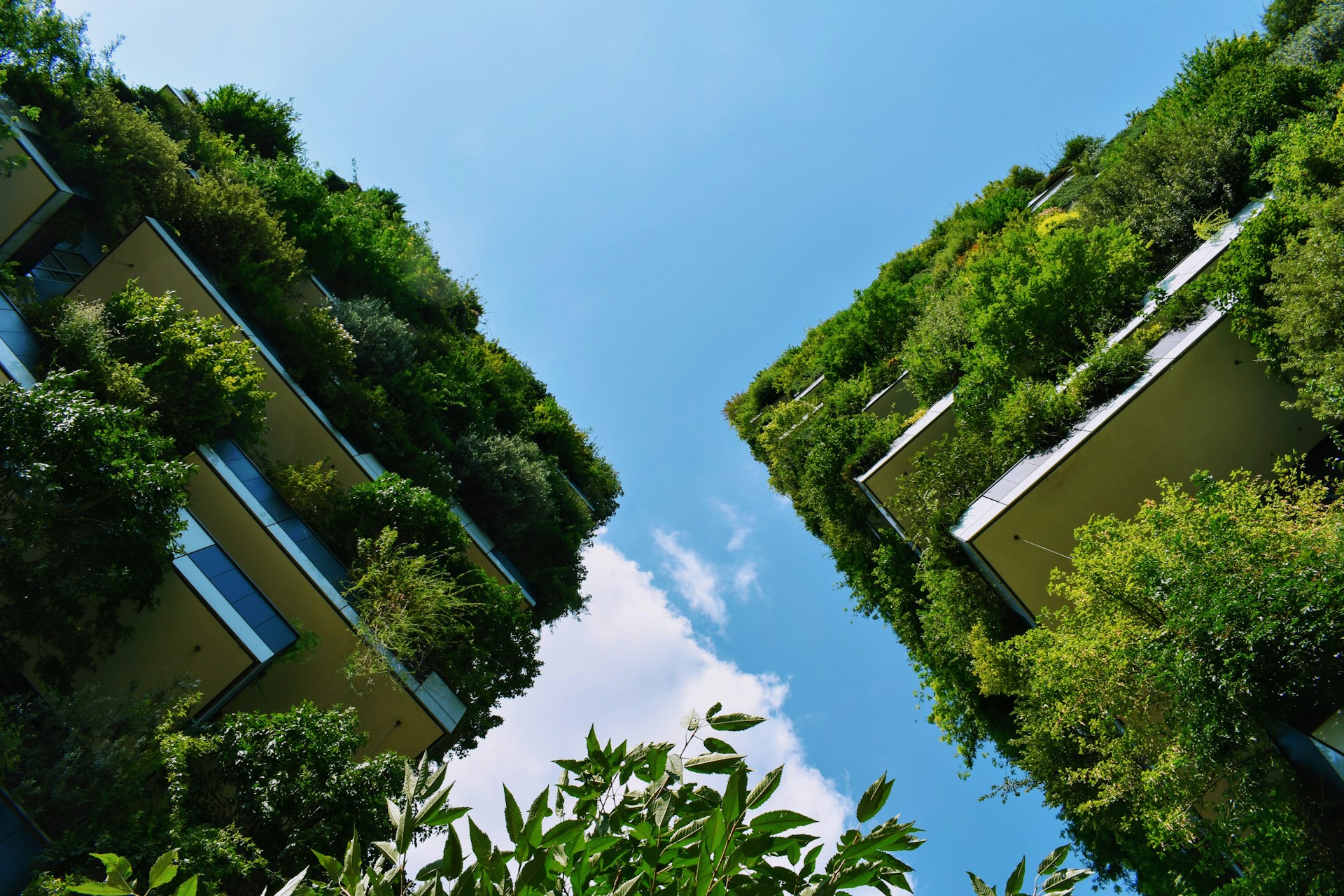
Photo Caption: A green building in Milan. Citizens should become the primary focus when cities aim to become smart, sustainable, and resilient.