Achieving Peace in a Fragmented World

By Frank-Jürgen Richter
August 11, 2025
War has been a burden on global economies. Other than harm to humans, wars completely disable economies, pushing global debts and increasing poverty and socioeconomic fallouts. Meanwhile quite the opposite happens when we try to strive for global peace and harmony. When countries were not bent on waging wars against each other, governments increasingly focused on building critical infrastructures; develop economic and trade agreements with other countries; instate favorable business policies to attract foreign investments; build schools and education systems; and develop transparent governance frameworks for the betterment of all.
But peace has been a fleeting dream. Countless wars have been waged in the history of mankind, leading to losses in terms of both economic and human. Not counting the countless wars that happened before the 20th century, since the 1900s an estimated 187 million people have died as a result of wars including the First and Second World Wars and several regional wars across the world.
Moreover, the 2025 Global Peace Index reveals that “the world became less peaceful for the 13th time in the last 17 years, with the average level of country peacefulness deteriorating by 0.36% over the prior year [2024]. This is the sixth consecutive year that global peacefulness has deteriorated.”
Global violence has also resulted in economic impacts amounting to US$19.97 trillion in 2024—a 3.8% increase from 2023. The increase in economic impacts because of global violence was largely due to GDP losses from conflicts and increased expenditure on military. Between 2008 and 2024, costs associated with conflict deaths, GDP losses from conflict, and refugees and internally displaced persons, each more than tripled.
Global Leaders Should Unite
Global leaders should unite to bring about global peace. We saw how global leaders took a united front in approving and adopting a pandemic agreement, developed by the World Health Organization. Adopted on 20 May 2025, the agreement provides framework on how countries can work together on areas including equitable and timely access to vaccines, therapeutics and diagnostics, to better prepare and respond to future pandemics.
COVID-19 pushed back years of development in terms of economic growth, SDGs progress and livelihoods. With more than 7 million people dead, the pandemic also wiped off trillions from the global economy.
The success of Gavi, the global vaccine alliance is a living proof of what united leadership can achieve in the healthcare front. Comprising of independent individuals, multilateral organizations (World Bank, UNICEF and WHO), philanthropies, and a mix of developed and developing countries, the alliance has successfully vaccinated more than half of the world’s children against some of the world’s deadliest diseases. Between 2000-2023, Gavi supported more than 1.9 billion vaccinations through preventive campaigns, averting more than 18.8 million future deaths, globally.
International forums such as the upcoming Horasis Global Meeting, are also a great place to bring together opinions and experiences of global leaders from various backgrounds to find a more holistic, inclusive, and sustainable framework to our present challenges. The global meeting is scheduled to take place in São Paulo, Brazil, between 7 to 10 October 2025.
Globally, geopolitical conflicts have heightened the crises around hunger, poverty, and migration, commented UN secretary‑general António Guterres, urging countries to choose diplomacy over wars to reinstate peace at a high-level debate of the UN Security Council in July 2025.
Peacekeeping Tools
UN’s Security Council has been an effective organ in helping end numerous conflicts, while working to maintain global peace and security. The Security Council deploys preventive diplomacy and preventive disarmament tools to prevent disputes from escalating into a conflict. The UN monitors development around the world to detect any threat to international peace and security. Once it identifies any anomaly, the Secretary-General and the Security Council engage in mediation and preventive diplomacy. Complementing preventive diplomacy is preventive disarmament, working to reduce the number of small arms in conflict-prone regions. The UN has been effective in destroying weapons as part of an overall peace agreement in El Salvador, Liberia, Sierra Leone, Timor-Leste and elsewhere.
Peacekeeping missions have also been instrumental in advancing global peace and security. Today’s peacekeepers perform a variety of complex tasks, from maintaining ceasefires and stabilizing situations on the ground to helping build sustainable institutions of governance. And to help build lasting peace in war-torn societies, the UN works to develop strategies, best practices, and marshal financing, with the help of political, security, humanitarian, and development actors. And finally, the UN works extensively with its member states to strengthen the rule of law—vital in achieving durable peace in the aftermath of a conflict.
But, achieving global peace is a herculean task and will need all the might and will of key stakeholders. “The support of local communities, civil society, non-governmental organizations, regional and subregional organizations, UN agencies, host governments, and other key partners is also critical to strengthen peacekeeping so it can save lives, advance political solutions, and help achieve sustainable peace. We cannot succeed alone,” said Jean-Pierre Lacroix, under secretary-general for Peace Operations at the UN.
Peace needs to prevail to ensure progress in education, health, economy, and fight against climate. These are areas where the world faces increasing issues, warranting collaboration and cooperation, foregoing differences and working towards a common goal for the betterment of all.
We were witness to how the global economy flourished, hunger reduced, healthcare became better in the backdrop of a peaceful world. Community, business, and global leaders need to actively strive towards making global peace a reality.
“Our world needs peace. Peace is the ultimate prize for all humanity… Cultivating a culture of peace means replacing division, disempowerment, and despair with justice, equality and hope for all,” said Mr Guterres on the International Day of Peace in September 21, 2024.
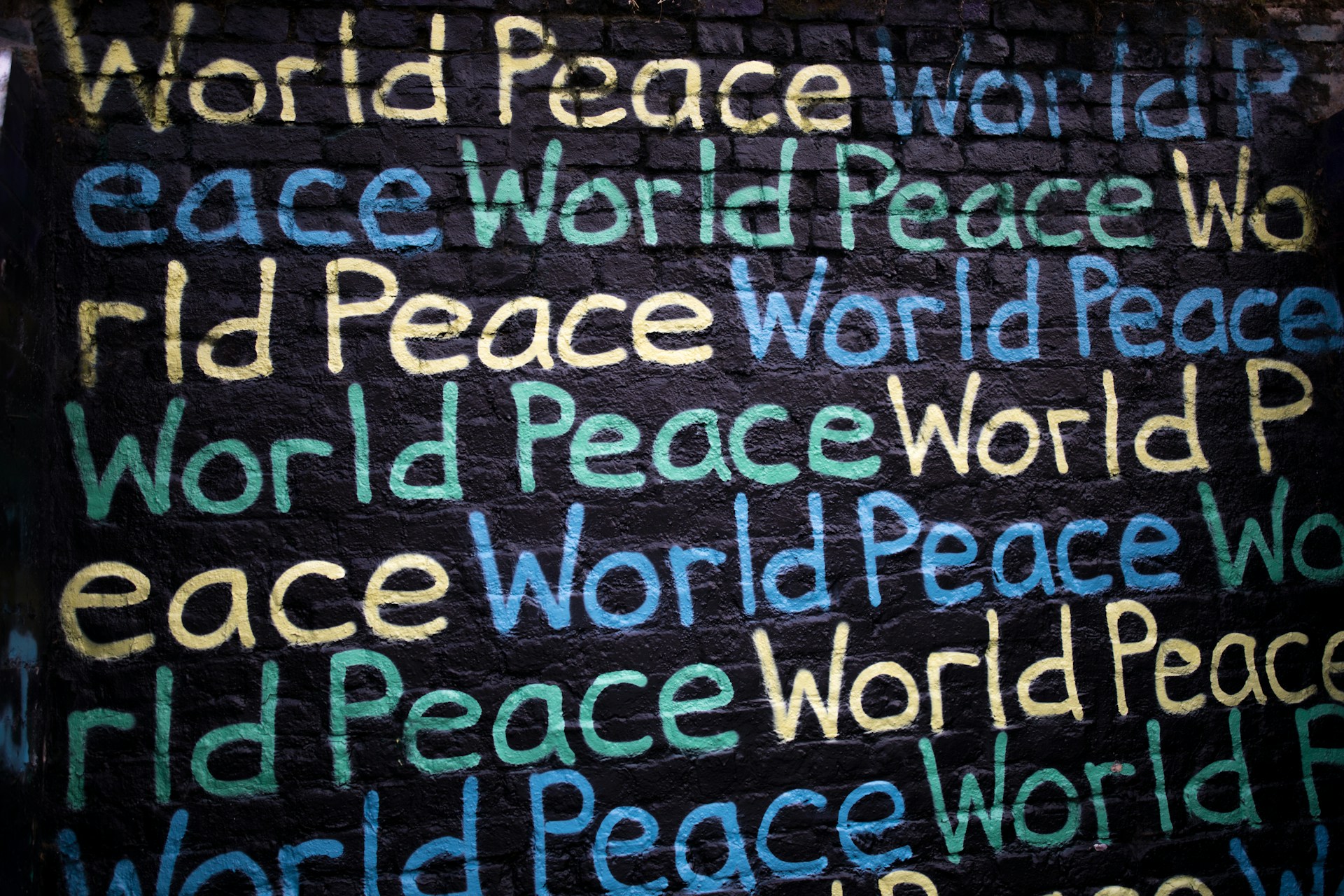
Photo Caption: Global leaders should unite to bring about global peace.